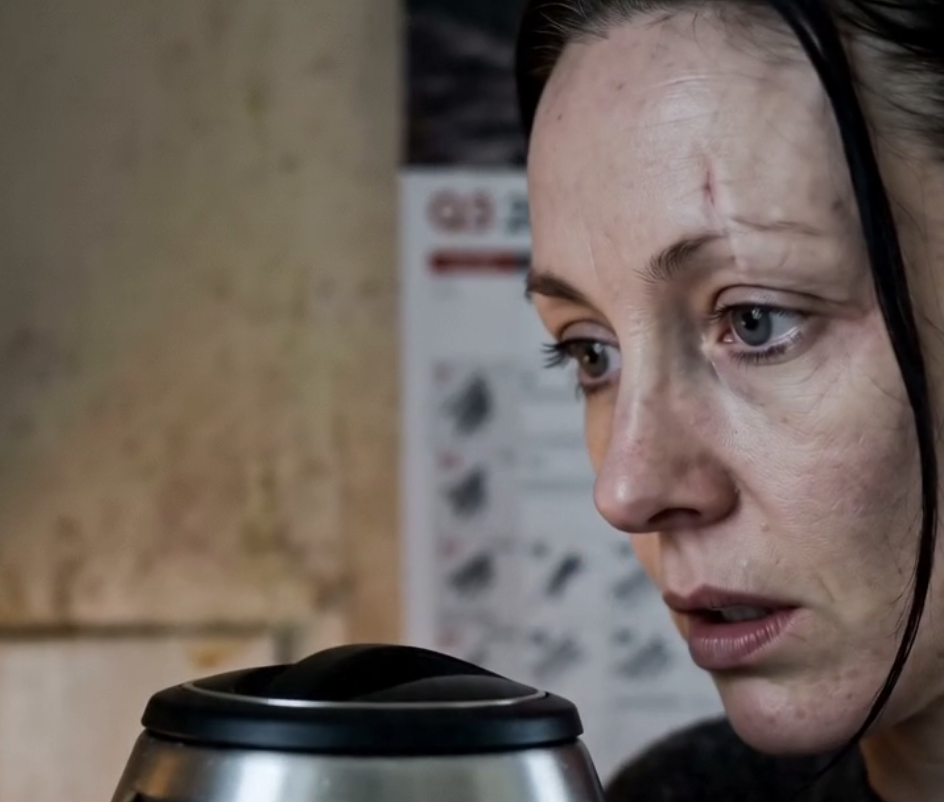

“You’ve been dead three weeks, Mum.”
I said it out loud to an empty kitchen and the words just sat there, refusing to be funny.
I’d come down to clear the cottage. Three bags of cardigans by the door. Dust sheets coming off the good chairs.
Then I saw the calendar.
It was current. Today’s date had a tick beside it. Tuesday, said the dentist, 2 pm. The ink looked fresh enough that I touched it, and it came away grey on my thumb.
My mother was buried on the ninth.
I told myself a neighbour had a key. Mrs Penhallow from the cottage along the lane checks on places out of season. She must have kept the calendar going out of habit, out of grief, out of whatever keeps old women turning pages for the dead.
I rang her to thank her. She’d been in Truro since Easter, she said. She hadn’t had a key since Mum changed the locks last spring.
I asked why Mum changed the locks. There was a long quiet on the line.
She said, because something kept getting in, love.
I stood in that kitchen for a long time after that.
I read the calendar forward. Next week was full. The week after. Every cell carried my mother’s slanted hand, and the further ahead I read, the wetter the ink became, as if she were writing the future faster than it could arrive.
Most of it was ordinary. Bins out Wednesday. Fish van Friday.
Then Thursday.
Thursday said bring her home.
The kettle was warm when I lifted it. Not warm like a room. Warm like someone had filled it twenty minutes ago and meant to come back.
I am alone in a house that is still being lived in by the woman I buried, and the calendar is not a record of her days.
It is a list of what she still intends to do.
The kettle was warm in my hands, and that was the detail I couldn’t put down.
Not the wet ink. Not the locked cottage. The kettle. Because a kettle holds heat for twenty minutes, half an hour at most, and that meant the arithmetic was simple and unsurvivable. Twenty minutes ago, while I was carrying cardigans to the door and talking to myself like a woman who still believed in the ordinary, someone had stood at this counter and filled it.
I set it down very gently, the way you set down something you don’t want to know you’re afraid of.
“Hello?” My voice came out smaller than I wanted. I cleared my throat and tried again, and the second time was worse, because the second time I heard how the house swallowed it. No echo. A room that’s empty gives you a little of your voice back. This room took it and kept it.
I went through the cottage then, fast, the way you do when speed feels like courage. Front room, dust sheets exactly as I’d left them. Mum’s bedroom, the bed stripped, the wardrobe half into bin bags. Bathroom. Box room. The back door bolted from the inside, top and bottom, the bolts stiff with old paint. Nobody had come through it in years.
I came back to the kitchen because the kitchen was where the calendar was, and the calendar was the only thing in the house still telling me what it wanted.
I made myself read it properly this time. Not skimming for the impossible bits. Reading it like a diary, which is what it was.
Monday. Phone Nell.
I stopped.
I am Nell. Nobody calls me Eleanor except the bank. My mother called me Nell from the day I was born, and there it was on Monday, two days ago, in her hand: phone Nell. And underneath it, smaller, the way she wrote things she didn’t want to forget, she doesn’t know yet.
I turned the thin gold band on my finger. It was hers. I’d taken it from the undertaker in a small plastic bag and put it on because I couldn’t think what else to do with a thing that had been on her hand for forty years. I turned it now without deciding to, round and round, the way I do when I’m holding something back from myself.
I read down.
Tuesday. Dentist, 2pm. Then: she’ll think it’s odd I kept the appointment.
Wednesday. Bins. Tell her about the locks. She won’t listen.
She. She. Every entry had a she in it, and the she was reading the calendar right now, and the calendar knew she would be.
My mother hadn’t been writing a record of her own days. She’d been writing mine. She’d been sitting in this kitchen in the weeks before she died, filling in a week I hadn’t reached yet, narrating a daughter who would come down to clear a cottage and find the pages waiting. She had written my arrival before I arrived. She had written my fear before I was afraid.
And the ink got wetter the further I read because the calendar wasn’t recording the future.
It was keeping pace with me.
I tested it. God help me, I tested it. I took the pencil from the jar by the bread bin, the soft pencil she did the crossword with, and I held it under Thursday’s entry, under bring her home, and my hand was shaking so the point chattered against the paper.
While I watched, a line of new writing pushed itself across the cell below. Slow. Letter by letter. Wet.
Don’t write back, love. You’ll smudge it.
I dropped the pencil. It rolled off the counter and under the dresser and I let it go.
“Mum.” I was crying now, the useless quiet kind. “Mum, what is this.”
The kettle clicked. Just the cooling tick of metal, but I spun toward it, and that’s when I caught myself in the window. The afternoon had gone, the glass had turned to a black mirror, and there I was in it, pale and badly held together, the loose strand of hair stuck to my wet cheek.
Behind my reflection, the kitchen was empty.
But my reflection wasn’t crying.
She stood very still, my face, my jumper, my mother’s ring on her finger, and she was watching me with an expression I had never once worn, which was patience. The patience of someone who has all the time there is. While I shook and dripped and clutched the edge of the counter, the woman in the glass kept her hands folded and her head tilted, and she waited, the way you wait for a child to stop fussing and understand.
The calendar’s last wet line was still visible past her shoulder, reversed in the glass.
I turned around. The room was empty. I turned back. She was still there.
“Who are you,” I said to the window.
The woman in the glass didn’t move her mouth. The words came from the wall instead, from the new ink crawling across Thursday, and I read them off the calendar as they formed.
The one she’s bringing home. You’ve been borrowing the house long enough.
I understood it then, in the cold complete way you understand something your whole body already knew. My mother changed the locks because something kept getting in. She kept the calendar because the calendar was the only place she could leave a message I’d be slow enough to read. Phone Nell. She doesn’t know yet. Tell her about the locks. She won’t listen. She hadn’t been writing my week to frighten me.
She’d been trying to warn me which one of us was real.
The reflection unfolded her hands. On the counter in front of me, the kettle was hot again. Steam lifted from the spout in a thin grey ribbon, though I hadn’t touched the switch, though the plug was hanging loose against the tiles where I’d knocked it earlier. Someone was making tea. Someone who lived here. Someone who had filled the kettle twenty minutes ago and meant to come back, and had.
Thursday’s cell was full now, every line of it, my mother’s hand crammed edge to edge.
The last line said: Drink it, love. It’s easier if you’re warm.
I have not touched the cup. It is steaming on the counter as I write this on my phone with my back to the window, because the moment I face the glass the writing stops, and the moment I turn away it starts again, and I think the only thing keeping me in this kitchen and not in that calendar is that I have not yet done a single thing she predicted.
I have not phoned anyone. I have not kept the appointment. I have not drunk the tea.
But I am cold. The cottage is so cold. And the cup is right there, and it is the only warm thing in my mother’s house, and her handwriting is so gentle, and it has never once been wrong about what I’ll do next.
How long can you refuse to become the person the house has already finished writing?