










• The Filmist

    The Filmist

    Welcome to our Comunity

  • My Husband Left Me and Our Six Kids for a Fitness Trainer – I Didn’t Even Have Time to Think About Re.ven.ge Before Karma Caught Up With Him

    My Husband Left Me and Our Six Kids for a Fitness Trainer – I Didn’t Even Have Time to Think About Re.ven.ge Before Karma Caught Up With Him

    My husband walked out on me and our six children for a woman who called him “sweetheart.” I didn’t run after him or beg him to stay. But when karma came crashing in louder than anything I could have said, I was there to witness the aftermath. I wasn’t there out of spite or revenge. I was there to remind myself of my own worth.

    The phone started vibrating on the kitchen counter just as I was scraping dried peanut butter off a plate.

    It was one of those late, breathless moments after bedtime when the house finally quiets down and all six kids are asleep. I’d already survived three final requests for water, an emergency sock change, and my youngest whispering her usual nighttime question into the darkness:

    “You’ll be here in the morning, right?”

    “I will,” I’d answer. “Always.”

    After that, I came downstairs, noticed my husband’s phone lighting up, and picked it up without a second thought.

    Sixteen years of marriage teaches you that your hands can move through his life without asking.

    It teaches you to trust automatically—until a single heart emoji turns into a weapon.

    **

    Cole was in the shower. So, naturally, I picked up the phone.

    “Alyssa. Trainer.”

    Underneath was the message that split something inside me.

    “Sweetheart, I can’t wait for our next meeting. ❤️ We’re going to the hotel by the lake this weekend, right? 💋”

    **

    I should have set the phone back down.

    Instead, I held it like evidence, like maybe staring at it long enough would somehow fix things.

    Footsteps moved down the hallway. I stayed planted in the kitchen.

    Cole walked in with damp hair, sweatpants, and a towel over his shoulder. He looked relaxed, completely comfortable, like nothing in the world was wrong.

    He noticed the phone in my hand and frowned briefly but simply reached past me for a glass in the cupboard.

    “Cole,” I said, watching him.

    He didn’t respond. He filled the glass, took a drink, then glanced at me like I was standing in his way.

    “Cole, what is this?” My voice cracked, and I hated that it did.

    “My phone, Paige,” he sighed. “Sorry I left it on the counter.”

    “I saw the message, Cole.”

    He didn’t even hesitate. He grabbed the orange juice and poured some.

    “Alyssa,” I said louder. “Your trainer.”

    “Yeah, Paige,” he said, leaning against the counter. “I’ve been meaning to tell you.”

    “Tell me what, Cole?” I demanded.

    He took another sip of orange juice like he was casually watching a game.

    “That I’m with Alyssa now. She makes me happy! You’ve let yourself go, and that’s on you.”

    “You’re with her?” I asked.

    “Yes.”

    That second yes hurt the most, because it meant he’d practiced this moment, and I was the last person to learn my own life had already been replaced.

    And that was it.

    No apology. No shame. Just the truth delivered like it was a minor inconvenience I was expected to deal with.

    “She makes me feel alive again,” he added, like he was performing a breakup speech.

    Alive?

    “We have six kids, Cole. What do you think this is, a coma?”

    “You wouldn’t understand,” he said. “You don’t even see yourself anymore. You used to care about how you looked. How we looked.”

    I stared at him.

    He continued. “When’s the last time you wore real clothes? Or something that wasn’t stained?”

    My breath caught. “So that’s it? You got bored? Found someone with tighter abs and nicer leggings, and suddenly the last sixteen years are what—a mistake?”

    “You’ve let yourself go,” he said bluntly.

    The words hit like a slap.

    I blinked slowly, anger rising. “You know what I’ve let go of? Sleep. Privacy. Hot meals. Myself. I let myself go so you could chase promotions and sleep in on Saturdays while I kept this house and our kids from burning down.”

    He rolled his eyes.

    “You always do this.”

    “Do what?” I shot back.

    “Turn everything into a list of sacrifices. Like I’m supposed to thank you for being exhausted.”

    “I didn’t choose to be exhausted, Cole. I chose you. And you turned me into a single parent without even bothering to shut the fridge.”

    He opened his mouth like he wanted to argue.

    Then he closed it again, picked up the bottle, and set it down.

    “I’m leaving.”

    “When?”

    “Now.”

    I let out a short, bitter laugh. “You already packed?”

    His jaw tightened.

    Of course he had.

    The clothes. The message. None of this was spontaneous. It had all been planned.

    “You were going to leave,” I said slowly, “without even saying goodbye to the kids?”

    “They’ll be fine. I’ll send money.”

    My hand curled around the edge of the counter.

    “Money,” I repeated. “Rose is going to ask where her pancakes are tomorrow morning. You think a bank transfer answers that?”

    He shook his head. “I’m not doing this.”

    Then he turned and headed upstairs.

    I followed.

    Because there was no way I was letting him disappear from our family like a ghost walking down the hallway.

    Our bedroom door was open. His suitcase sat on the bed, already half zipped, clothes folded far too neatly for someone who’d just decided to leave.

    “You were never going to tell me, were you?” I asked.

    “I was.”

    “When? After the hotel? After the pictures showed up online?”

    He didn’t answer.

    I stood in the doorway, trembling. “You could’ve told me you were unhappy.”

    “I am telling you,” he snapped. “I’m choosing my happiness.”

    “And what about ours?”

    His back stayed turned, shoulders stiff.

    “I can’t do this with you, Paige,” he said. “You make everything messy.”

    Something inside me finally snapped, like a rubber band stretched too tight.

    “No, you made it messy the moment you started seeing someone else.”

    He didn’t respond. He dragged the suitcase past me and walked out.

    I didn’t chase him.

    Instead, I stood at the window and watched his taillights disappear down the street without slowing once.

    Then I went downstairs, locked the door, and finally let the weight of everything he hadn’t said crash down on me.

    “Okay,” I murmured into my clenched hand. “Okay. Just breathe.”

    I stayed there for a long moment, listening to the silence pressing in around me.

    I cried until it felt like my ribs were bruised from the inside out—not only for myself, but for what morning would bring. For the questions my kids would ask. Questions I couldn’t lie about, but couldn’t fully answer without breaking something inside them.

    **

    At exactly six, my youngest climbed into bed beside me, dragging her blanket behind her like a cape. She curled up against my side.

    “Mommy,” Rose murmured sleepily. “Is Daddy making pancakes?”

    My heart split open.

    “Not today, baby,” I whispered, kissing her curls.

    I forced myself out of bed before I could fall apart again. Breakfast had to happen. Lunchboxes had to be packed. Socks had gone missing. One shoe had disappeared completely, somehow ruining two children’s mornings at once.

    A few hours later, while I was pouring milk, my phone rang.

    Mark—Cole’s coworker. The same man my kids trusted enough to climb on like he was playground equipment.

    I lifted the phone to my ear. “Mark, I can’t—”

    “Paige,” he interrupted. His voice was tight, controlled, but beneath it I heard the panic. “You need to come here. Now.”

    “Where?” I froze mid-pour. “What’s happening?”

    “I’m at the office,” he said. “Cole’s in a glass conference room. HR’s here. Darren too.”

    My stomach dropped. “What did Cole do?”

    Mark paused briefly. “The company card. It got flagged.”

    I gripped the edge of the counter. “Flagged for what? I didn’t even know he had access to it.”

    “Hotel charges. Expensive gifts. All connected to the trainer from the office gym. Alyssa. She’s technically a vendor through the wellness program, and compliance has been auditing Cole’s expenses for weeks. They didn’t know it was an affair until last night. They just knew he was draining money.”

    My stomach twisted.

    “The company phone plan caught it first,” Mark continued. “Then the charges lined up with the same dates. They don’t need rumors about romance. They’ve got receipts.”

    I closed my eyes. “Why are you telling me this?”

    Mark exhaled slowly. “Because Cole thinks he can spin it. He called you ‘emotional.’ Said he could always come back home because he knows how to ‘handle you.’”

    I looked at the breakfast table, at my kids wandering around deciding what to do with their day.

    “I have six children, Mark. Leah is twelve. I can’t hide something like this from her.”

    “I know,” he said quietly. “That’s exactly why you need to come.”

    I hit mute.

    My youngest tugged gently on my shirt.

    “Mommy?”

    I crouched down to meet her eyes. “Go sit with your brother for a minute, baby. I’ll be right there, okay?”

    She nodded and shuffled off, dragging her stuffed bunny behind her.

    I unmuted the call. “Fine. I’m coming.”

    I ended the call and immediately dialed Tessa next door. She answered on the first ring.

    “I need a favor,” I said.

    “I’m already tying my sneakers, Paige,” she replied. “Just go.”

    I didn’t bother changing my clothes. I grabbed my purse and keys, kissed each kid on the head, and hurried out the door.

    The drive blurred past me. My hands clamped the steering wheel too tightly. My jaw hurt from clenching it. Rage sat in the passenger seat beside me.

    **

    When I walked through the office lobby, everything felt too perfect—polished floors, quiet voices, a place that pretended problems didn’t exist.

    Mark stood waiting near the front desk.

    “They pulled the reimbursement reports,” he told me. “Hotel bookings, wellness claims, expensive gifts.”

    I swallowed. “All tied to Alyssa?”

    “They traced everything back to her vendor profile,” Mark said grimly.

    “Texts too?”

    “Oh yeah,” he replied. “Expense reports, vendor records, his company phone history. HR has it all.”

    He nodded toward the glass conference room.

    Inside, Cole was pacing, gesturing with his hands like he was pitching something. HR sat across from him without expression. Darren, the CEO, looked worn out. A VP I’d only seen at holiday parties sat quietly watching like a judge.

    Then the door swung open.

    Alyssa stormed inside, ponytail swinging, phone in her hand, already raising her voice. She didn’t even knock.

    “What is she doing?” I whispered.

    “Making it worse,” Mark muttered. “She’s furious they’re dragging her name into this.”

    HR lifted a hand to quiet her, but Alyssa talked straight over it.

    Someone slid a manila folder across the table toward Cole.

    He stopped mid-sentence.

    His entire posture collapsed, like the air had been knocked out of him.

    **

    About twenty minutes later, the door opened again. Cole stepped into the hallway—and froze when he saw me.

    “Paige,” he said softly.

    I didn’t move.

    He walked toward me. “This isn’t what it looks like, honey.”

    “I’m not doing this in front of strangers. You’ve done enough of that already.”

    Mark snorted quietly behind me.

    “You said you’d send money,” I told him. “I want it in writing. Then maybe you’ll finally learn how to live without hiding behind a paycheck and lies.”

    His jaw tightened. “Paige—”

    “No.” I lifted a hand. “You don’t get to say my name like we’re still a team.”

    Behind him, Alyssa scoffed. “Oh my gosh.”

    I turned to face her. She looked ready to explode—eyes narrowed, lips parting to speak.

    Before she could, a woman in a navy blazer stepped into the hallway.

    “Alyssa,” she said calmly, her voice cold as ice. “Your contract is terminated effective immediately. Legal will contact you. Do not return to this building.”

    Alyssa blinked. “You’re kidding, Deborah. I work here.”

    “This is not a discussion,” Deborah replied. The hallway went silent.

    Cole turned toward her. “You can’t just fire her like that—”

    “We can,” Deborah said evenly. “And we are.”

    Then she looked at Cole.

    “Effective immediately, you are on unpaid suspension pending termination. Turn in your badge.”

    A security guard stepped closer with a clipboard.

    That ended the argument.

    For a moment nobody moved. Alyssa’s face drained white. Cole looked like someone had yanked the floor out from under him.

    I stepped closer to him.

    “I’m going home,” I said quietly. “To our children.”

    “We need to talk.”

    “We will,” I replied. “Through lawyers. You made your choice, and I’m done cleaning up the damage. Don’t come back.”

    He stood there speechless. Alyssa stared at him like she’d just realized she’d tied her future to a man who couldn’t keep his life together.

    I turned and walked away.

    Back at home, the kids were waiting for me.

    I crouched down and hugged each one of them. Rose held on a little longer than the others.

    “Is Daddy coming home?” she asked.

    “No, baby,” I said gently. “Not today.”

    She frowned. “Tomorrow?”

    I took a slow breath.

    “Maybe not for a while,” I said softly. “But I’m here. And I’m not going anywhere.”

    For the first time, I was choosing myself—and my children.

    He had made his decision.

  • At my sister’s promotion party, I hadn’t even lifted my champagne when she looked at me and said, “You’re fired. Security can escort you out.” I calmly set my guest badge on the table and answered, “Tell Mom and Dad the board meeting starts in three hours.” The look on her face was pure shock.

    At my sister’s promotion party, I hadn’t even lifted my champagne when she looked at me and said, “You’re fired. Security can escort you out.” I calmly set my guest badge on the table and answered, “Tell Mom and Dad the board meeting starts in three hours.” The look on her face was pure shock.

    Part I: Fired

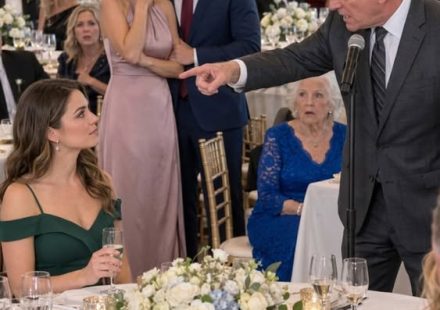
    The applause was still rolling when my sister turned from the stage, lifted the mic, and said, “You’re fired. Security will escort you out.”

    I hadn’t touched my champagne.

    For one second, nobody moved. The band had just finished. Her giant headshot still glowed behind her. Two hundred people in black tie sat there smiling, waiting for the next cue.

    Then the room went dead.

    A glass hit a table too hard. A fork tapped china. Somebody whispered, “Oh my God.”

    I looked at my sister first. Perfect lipstick. Perfect hair. Perfect posture. She looked like someone who had never been denied anything in her life.

    Then I looked at my parents.

    My mother sat rigid, hands locked in her lap. My father wore that blank face he used whenever he wanted silence to do his work for him. My brother leaned back like this was ugly but necessary.

    No one stopped her.

    That was enough.

    I stood. Slow. Clean. No scene.

    I took the badge off my neck and looked at it once.

    Under my name, beneath the company logo I had helped redesign eight years earlier, it said one word.

    Guest.

    Not partner. Not founder. Not board member. Guest.

    I set it beside my untouched glass.

    Two security guards started toward me. I raised a hand. They stopped.

    “I know where the door is,” I said.

    My sister opened her mouth like she had another line ready. I didn’t give her the chance. I picked up my clutch, smoothed my dress, and walked out through a room full of people suddenly fascinated by their bread plates.

    Nobody said a word.

    That was what stayed with me later. Not her voice. The silence. The way a room can agree, without speaking, that one person is expendable.

    The ballroom doors shut behind me.

    Outside, the corridor smelled like lemon polish and old air-conditioning. My pulse was steady. I hated that. I thought I’d be shaking. Instead I felt cold. Focused.

    By the time I reached my SUV, rain had started.

    I sat behind the wheel and looked at my own face in the windshield.

    You’re fired.

    She thought that meant something.

    It only matters when the person doing the firing has the right.

    I drove home in silence. Twenty-six minutes through wet downtown St. Louis. Wipers. Turn signal. Breathing.

    Memories kept surfacing on their own. My father signing papers while watching football. My sister taking credit in a board meeting and smiling while everybody praised “her instincts.” My brother saying family like it was a weapon.

    When I pulled into my garage, the motion light snapped on. White concrete. Workbench. Printer. File boxes. Two legal pads. The laptop I’d left charging that morning.

    I hadn’t built any of that for revenge.

    I built it because in our company, if I didn’t keep records, facts changed shape.

    I didn’t go inside. Didn’t change clothes. Didn’t wash my face.

    I opened the laptop on the hood of the car.

    Face recognition. Unlock. Desktop. Folders.

    I clicked one labeled Continuity.

    Fifteen years of the company’s real history sat there. Ownership agreements. Board minutes. Emails. Client notes. Vendor disputes. Scanned contracts with coffee stains and crooked signatures. All the boring paper that kept the place alive while louder people stood in front of cameras and talked about vision.

    My phone started vibrating before I opened the first file.

    My brother.

    Then my mother.

    Then my sister.

    Earlier that morning, before the dress, before the mascara, before the hotel, I had blocked every family number I had.

    Now all I got were voicemails trying to slip through.

    I ignored them.

    At the bottom of the folder sat one scanned page I knew by heart. One signature. One date. One clause buried exactly where nobody in my family had ever looked because they thought details were for other people.

    I opened it.

    Three hours earlier my sister had fired me in public.

    What she had actually done was pull a pin.

    The countdown had already started.

    Part II: Equity

    I was eighteen the first time I understood my family didn’t control people by yelling.

    They controlled people by making things feel settled before anyone else could speak.

    Back then the company was still a warehouse in North St. Louis. Bad insulation. Flickering lights. Concrete floor. Summer heat. Winter cold. Dust. Oil. Cardboard.

    Most of my friends were picking colleges.

    I was doing twelve-hour days in steel-toe boots for a company my father still called my business even when half the invoices had my handwriting on them.

    That afternoon he called me over to a folding table near receiving.

    “Sign this.”

    He didn’t look up. Football was on the tiny TV. He had one eye on the screen.

    The contract offered salary, insurance, a title, incentives. It looked generous. That was always the family move. Nothing openly cruel. Just traps dressed like opportunity.

    My sister stood behind him spinning a ring of office keys around one finger. She was twenty, fresh out of community college, loud, pretty, and good at making people feel smart for liking her.

    I read the contract once and put it down.

    “I want equity.”

    Dad gave a short laugh through his nose. “Take the money, Megan. Equity is paper. Salary is real.”

    “I know what equity is.”

    “You’re eighteen.”

    “And I still know.”

    The warehouse kept moving around us. Forklift beeps. Tape guns. Somebody swearing.

    I stayed calm because I had already done the math.

    I knew our clients. I knew our margins. I knew which vendor was quietly overbilling us because nobody compared revised invoices to originals.

    If I was going to give the company my twenties, I wasn’t doing it for applause and a paycheck.

    Dad rubbed his jaw. “This isn’t a negotiation.”

    “It is if you want me here.”

    He finally looked at me. Same gray eyes. Same blood. Different species.

    My sister clicked her keys louder. “You always make everything difficult.”

    I slid my own paper across the table.

    “It’s a conversion agreement. Lower salary. Minority equity. More tied to performance.”

    Dad barely read the title. His team on TV was driving downfield.

    “You can say no,” I told him.

    He signed.

    That was it.

    My sister leaned in close. “One day, you’re going to regret being so difficult.”

    “Maybe,” I said.

    I meant no.

    The company grew. Fast and sloppy. Money came in. My sister got bonus envelopes in public. New titles. Visible wins.

    When bonus season came for me, I didn’t take cash.

    “I’ll take another point.”

    Dad signed again.

    The second time was easier. The third time was automatic.

    That taught me something useful. Once someone decides you’re harmless, they stop reading.

    My brother joined the year after that. Older than me by two years. Smooth. Lazy. Protected. He lost records. Forgot callbacks. Missed details. Dad told me to fix it. Mom said he had too much on his plate.

    If I missed anything, it became a flaw in my character.

    I stopped arguing about fairness. Fairness is a word people with power use when they don’t intend to give any up.

    So I kept trading what they valued—cash, praise, titles—for what they didn’t.

    Paper.

    Years later, in 2012, my sister nearly pushed us into a partnership that would have bled the company dry. We were in the old living room. Pot roast in the air. Football flickering. Men on a laptop screen talking about synergy and upside.

    I’d already run the numbers.

    “Good deal or not?” Dad asked.

    “No.”

    My sister snapped, “You haven’t even let them finish.”

    “I have the financials. I don’t need the adjectives.”

    Mom made her usual warning sound.

    I slid another paper under the contract while my sister talked and Dad watched the game.

    Dry language. Easy to ignore. Contingency authority. Governance protections. Bad-faith executive action.

    Dad signed where I marked.

    My sister stared. “What did you just add?”

    “A safeguard.”

    “For who?”

    “For the company.”

    She laughed. “Why do you always have to insert yourself into everything?”

    Because none of you can run this place, I thought.

    Later that night I scanned every page and saved them in two places.

    One of those pages would become the quietest weapon in the building.

    At the time, all my family knew was that I had done it again.

    Read too closely. Asked too much. Made myself harder to erase.

    They thought that was my weakness.

    It was the map.

    Part III: Guest Pass

    By my late twenties the company had moved downtown into glass and steel. Polished lobby. Expensive chairs. Coffee machine that hissed like a threat. From the outside, it looked like my sister’s story had come true.

    Inside, it was held together by dull decisions and quiet repairs.

    Mine.

    I rebuilt vendor terms after my brother promised discounts he couldn’t authorize. I caught payroll errors before they hit two hundred people. I sat with legal when a draft came back broad enough to swallow us whole. When clients got angry, I took the calls.

    At family dinners, I was still “helping out at the office.”

    I stopped caring what my family thought. I watched the board instead.

    The board noticed patterns. Mrs. Adams noticed numbers improving. Scott noticed I answered questions without slogans. Henderson noticed everything.

    I never campaigned. I just put accurate information in front of the right people.

    Over time, that builds something louder than charm.

    Three hours before the gala, I arrived early. I had written a real toast. Stupid, maybe. But I still thought the company mattered more than the family using it as a stage.

    The ballroom was half lit. Staff moved between tables. The room smelled like lilies and coffee and hotel butter.

    The screens beside the stage cycled through the presentation.

    My sister’s face. New CEO.

    My brother’s face. Vice President of Sales.

    Then the line below them.

    Leading the Future of the Family Company.

    I stood there and felt something inside me lock.

    A staffer walked over with a clipboard. “Sorry. Are you with catering or AV?”

    “Neither.”

    He apologized. I moved on.

    At the seating chart, my name was at table twelve.

    Not table one. Not with family. Not with the board.

    Table twelve.

    At registration, the badge waiting for me said the same thing.

    Guest.

    I put it on.

    Sometimes evidence has to touch your skin.

    At table twelve, I sat beside a vendor I had personally kept alive two years earlier and an investor who introduced himself twice because he didn’t know who I was.

    My toast stayed folded in my clutch.

    I never used it.

    Halfway through dessert, my sister took the mic, looked straight at me, and started talking about alignment and culture and hard decisions.

    Then she said my full name.

    Then: “You’re fired. Security will escort you out.”

    There it was.

    Not impulse.

    Ceremony.

    As I walked out under two hundred pairs of eyes, I understood the real point.

    I hadn’t just been excluded.

    I had been erased on purpose.

    And if they were willing to do that in public, it meant they believed I had nothing they still needed.

    That was their mistake.

    Part IV: The Trigger

    Back in my garage, I opened Governance and started with ownership.

    The numbers were exactly where I expected. Years of taking equity instead of cash. Quiet conversions. Protective clauses. Anti-dilution language. Signatures nobody had read. By the time my family finished handing me paper they thought was harmless, I held the largest individual stake in the company.

    Not a dramatic majority.

    Better.

    A decisive plurality under the rules they had all signed.

    Then I opened the clause from 2012. The boring one. The one my father signed while watching football.

    Perfect.

    I drafted the emails.

    Board chair first.

    Then Adams. Scott. Henderson. Outside counsel.

    No drama. No threats. Just facts, attachments, and the AV transcript of my public termination.

    I hit send.

    The garage went quiet.

    Then the read receipts hit.

    Henderson first. Received. Reviewing now.

    Miller next. Enforceable. Proceed.

    That was enough.

    People think power feels electric.

    It doesn’t.

    It feels administrative.

    Correct signatures. Correct timing. A lawyer who understands what matters because you spent years feeding him clean paper before anyone else thought to ask for it.

    My blocked phone kept lighting up.

    I ignored it.

    Some things hit harder on paper, so I printed everything again. Governance trigger. Emergency notice. Signature pages. Summary sheet.

    Courier pickup in fourteen minutes.

    While I waited, I logged into the internal voting portal I had built after the old system crashed during a compensation vote and my brother blamed “the software” instead of his own negligence.

    I activated the emergency template.

    Then I sat still and listened.

    Rain.

    Printer cooling.

    Dog barking somewhere outside.

    My own pulse.

    That was when memory tried to soften me. My sister at sixteen on my bed stealing nail polish. My mother making lunches. My father teaching me to drive.

    Cheap mercy.

    I let it pass.

    The courier came. I handed over the packets. Once they were moving, the night tipped past reversible.

    Then I sent the final page.

    Hotel security authorization under board instruction.

    Not to remove me.

    To hold the room.

    Hotel management wrote back fast.

    Counsel advises compliance.

    My sister’s party was still going on.

    I pictured her laughing under stage lights, thinking the hard part was over.

    Then Henderson’s message hit.

    Room will be held. Return now.

    I closed the laptop, opened it once more, then picked up my keys.

    She still thought she had fired me.

    She had just fired herself.

    Part V: Vote

    The ballroom felt different when I came back.

    Same lights. Same flowers. Same expensive noise. But the corridor had tightened. Security wasn’t drifting anymore. Staff were speaking lower. The room had started to smell the legal risk.

    Good.

    Inside, some people still hadn’t caught up. A man at table six was showing someone boat pictures. Two women near the back were taking selfies.

    The board had caught up.

    Phones checked. Faces changed. Henderson and Miller were standing together. Scott was polishing his glasses. Mrs. Adams sat very straight.

    My sister saw me halfway to the stage.

    First confusion. Then irritation. Then she glanced at the security guards, expecting them to move.

    They didn’t.

    I set my laptop on the presentation stand.

    Henderson stepped beside me. No questions. He had already read the documents.

    He nodded to the AV tech.

    My sister’s giant headshot vanished. Black screen. Then white text.

    Emergency Shareholder Meeting
    Article 12B Activated

    The room shifted.

    My sister stood so fast her chair tipped.

    “What is this?”

    Her mic was still live. Everyone heard the crack.

    Henderson said, “By authority of the governing documents and at the request of the triggering shareholder, this company is now in emergency session.”

    My brother laughed, thin and sharp. “Can we not do this here?”

    Miller said, “Legally, yes. We can.”

    The screen changed to the ownership ledger.

    No spin. No emotion. Just math.

    My sister stepped toward the stage. “Megan, stop. This is my ceremony.”

    Henderson ignored her. “Motion on the floor. Do I have a second?”

    “Yes,” Mrs. Adams said.

    “Second,” Scott said.

    Then three more.

    The voting portal opened.

    58%.

    The room went dead.

    61%.

    65%.

    My brother grabbed his phone and started hitting it like that would save him.

    My mother turned to my father with both hands open. Fix it.

    He couldn’t.

    69%.

    My sister made a sound like something inside her had slipped.

    “You blindsided us.”

    I looked at her.

    “No. I documented you.”

    73%.

    Locked.

    Henderson said, “Motion carries. Effective immediately.”

    My sister stepped back like the air had shoved her.

    My brother snapped, “This is family.”

    I turned to him. “This is structure.”

    Miller added, “And binding.”

    My father finally spoke. “There has to be a mistake.”

    That line would have worked better if he hadn’t spent his whole life proving he read nothing.

    Then the screen changed again.

    Expense file.

    Red flags.

    Property staging.

    Luxury travel filed as client development.

    Interior design invoices tied to my sister’s lake house.

    She stared at it. Pale now.

    “That’s not what that is.”

    “Then the audit will clarify it.”

    My brother shot to his feet. “You went through our accounts?”

    “Our accounts?”

    He flinched.

    My mother touched her throat. “Megan, please. Not like this.”

    Again. Please. Now that the room was watching them.

    I thought of all the years I had spent quietly fixing the messes they made publicly.

    The badge still sat on the table by my champagne.

    Guest.

    “No,” I said.

    Henderson moved through the rest. Interim authority transfer. Account controls. Forensic audit. Security seals on both executive offices.

    No one clapped.

    This wasn’t triumph. It was structure doing what it had always been built to do.

    My sister stood in front of her own giant portrait on the side screen and said, “This is revenge.”

    Maybe the room expected me to deny it.

    I didn’t.

    “No. This is consequence.”

    No one rushed to her side. That told me enough.

    Miller leaned in. “There’s more in the expense file. Hold it until tomorrow.”

    I nodded. Timing matters.

    Guests started leaving in clusters, coats half on, eyes bright with the thrill of having witnessed something ugly and expensive. The band packed in silence. Waiters cleared dessert plates without looking anyone in the face.

    My sister stayed rooted near the stage.

    Finally she looked at me like I was no longer a prop but a person she had badly misread.

    “What did you do?” she asked.

    I picked up my laptop.

    “Read what you signed.”

    Then I walked past table twelve.

    My champagne was still there. Warm. Untouched. Beside it, the badge that said Guest.

    I left them both.

    Behind me, the projector hummed softly over the room.

    The party was over.

    The autopsy had begun.

    Part VI: The Box

    The office smelled like coffee, toner, and panic the next morning.

    I got there before seven.

    By eight, both executive offices were sealed. My sister’s. My brother’s. Quietly. No drama. Just notices from counsel and suspended access.

    Good.

    We started cleanup immediately. Henderson. Adams. Scott. Outside counsel. Interim compliance team. We met in the big conference room my sister had renamed The Vision Room.

    I changed it back to Conference A before the meeting started.

    No one said anything.

    We handled the essentials. Authority transfers. Vendor reassurance. Audit scope. Spending restrictions. Damage control.

    The company, stripped of theater, looked exactly like what it was.

    Work.

    By noon, Carla from accounting brought in three folders.

    “Thought you’d want these first.”

    Executive reimbursements. Warm from the copier. Highlighted receipts. Landscaping for the lake house. Charter flights. Staging. Furniture. Spa services buried inside “hospitality.”

    Of course.

    People like my sister and brother don’t start by stealing dramatically. They start by stealing in boring ways.

    We added it all to the audit file.

    At two, reception called.

    My mother was downstairs.

    “She says it’s personal.”

    Everything with her was personal.

    I sent her to the small conference room.

    She walked in carrying a cedar box I knew from childhood. Linen closet. Off limits. “Important family papers.”

    She sat across from me and held it like it weighed more than paper.

    “You look tired,” she said.

    Not apology. Not accountability. Motherhood as camouflage.

    “I have work.”

    She slid the box across the table. “You should see these before your lawyers do.”

    Inside were folders, old legal pads, early company papers, handwritten notes.

    The first page I pulled out had my father’s handwriting on it.

    Keep Megan close, never let her control the board.

    I looked up.

    My mother was already crying.

    “There’s more,” she whispered.

    There was.

    Compensation strategy. My sister made visible. My brother made “commercially empowered.” Me kept internal. Me fed “small pieces of ownership so she feels included.”

    Then a margin note.

    She’ll work harder for approval than money.

    That one landed like a blade.

    My mother wiped under one eye and said, “He was wrong.”

    That was what she gave me.

    Not I’m sorry.

    Not I knew.

    Just: he was wrong.

    As if the problem was his bad prediction, not their conduct.

    “Did you know?” I asked.

    She hesitated.

    Enough.

    Buried near the bottom of the box was a sealed envelope in my own handwriting from fifteen years earlier.

    I had no memory of handing it to anyone.

    After she left, I locked the door and opened it.

    It was a letter I had written to my father at eighteen.

    Plain. Clear. I told him I could see where the company was heading if nobody paid attention. I told him I wanted equity because I believed in the business and refused to spend ten years building something I would never belong to. The last line said, If the answer is no, tell me now. I’ll leave.

    I had never given it to him.

    On the back, in my mother’s handwriting, one line.

    You saw them clearly before I did.

    Not absolution.

    But honest. For once.

    I kept digging.

    More notes from my father.

    Lila — face of growth
    Drew — useful with clients if supervised
    Megan — operational asset, keep internal

    Asset.

    That word did all the work.

    He had always understood my value. He just preferred it trapped.

    Then, later that evening, an email got through from my sister from an outside address.

    Subject line: You don’t understand what really happened.

    She claimed the public firing had been her choice, not our father’s. Then she told me to ask Mom what she traded years ago to keep the board from naming me.

    Specific. Too specific to ignore.

    So I opened the cedar box again.

    Deep in the bottom, I found another sealed envelope from my mother.

    Inside were board notes from eleven years earlier.

    Margin note.

    Delay Megan. Offer seat to Lila. Richard promised Arizona property stays in my name.

    I sat there staring at the page until the room went flat.

    My father had sold my future cheaply.

    My mother had taken the deal.

    For years I had thought she was the softer betrayal.

    I was wrong.

    Part VII: Inventory

    I agreed to meet them once.

    Not because they deserved it. Because I wanted every illusion dead before the legal documents started moving in earnest.

    We met in a private conference suite at the law firm. Neutral ground. Water glasses. Half-drawn shades. Chairs designed to make people feel contained.

    I got there first.

    They came in together. My father first. My mother next, already arranged into sorrow. My brother angry. My sister tired in a way that almost looked human.

    No one hugged me.

    Good.

    We sat.

    Then my father said, “This has gone too far.”

    I smiled.

    He hated it.

    “You set the distance,” I said.

    My brother leaned forward. “Can we stop talking like robots? We’re family.”

    I turned to him. “You only use that word when you want immunity.”

    His mouth opened and shut. My sister looked away.

    My mother folded her hands. “We know we made mistakes.”

    “Mistakes,” I said. “Like publicly firing me? Looting the company? Keeping me useful and invisible? Trading my board path for Arizona property?”

    That landed hard.

    My mother went white. My father snapped toward her. My sister gave a bitter little laugh.

    “Well. There it is.”

    “Be quiet,” my father said.

    The first honest command in the room.

    I looked at him and saw what he really was. Not force. Habit. A man who had grown old on other people’s labor and called it authority.

    “I want to hear you say it,” I said.

    “Say what?”

    “What you did.”

    He stared at the table. “I managed succession.”

    “No. Try again.”

    His jaw tightened. “I made sure the company stayed stable.”

    “By keeping me hidden.”

    “By keeping the board comfortable,” he snapped. “They didn’t want—”

    He stopped too late.

    “They didn’t want what?”

    He looked at me then and understood there was no version of this that saved him.

    “A woman like you,” he said.

    There it was.

    Competent. Direct. Not decorative enough. Too independent. Wrong packaging for old men.

    My sister laughed again. Bitter now. “So you picked me because I looked good in a room.”

    He didn’t deny it.

    My brother swore.

    My mother started crying for real. “I told myself it was temporary. I thought if I kept peace in the house there would be time to fix it.”

    “There was time,” I said. “You used it.”

    My sister looked at me. “I hated you for years. You always knew where the weak spots were. You walked into a room and I felt like everybody could tell I was performing.”

    “That’s because you were.”

    She actually looked relieved hearing it.

    My brother shoved back from the table. “This is insane. Every family gives people roles. You’re acting like we committed murder.”

    “No,” I said. “You committed theft. Financially. Professionally. Emotionally. It just took you a long time to meet somebody willing to inventory it.”

    Then Miller came in with settlement drafts.

    Cause-based resignations. Repayment schedules. Restrictions. Releases.

    The room changed the second paper touched the table.

    That was when they finally understood this wasn’t family catharsis.

    It was conclusion.

    My father refused first.

    My sister read in silence.

    My brother cursed and called the terms punitive.

    My mother signed before anybody else.

    That was the ugliest thing she did all day. Faster than grief. Faster than guilt. Straight into self-preservation.

    My sister took longer. When she signed, she never looked at me.

    My father signed last with the same careless grip I had watched him use in the warehouse when I was eighteen.

    That almost made me dizzy.

    When it was done, my mother reached toward me. “Megan—”

    I stood.

    “No.”

    That was all.

    I collected my papers and slid them into my bag.

    “You do not get access to me because you’re sad now,” I said. “You don’t get a healing arc because the strategy failed. You had years. You used them. I’m done.”

    My father started some final speech.

    I never heard it.

    I was already at the door.

    That was when I knew forgiveness would have been a lie.

    Part VIII: Legible

    Four months later, the building felt like it belonged to itself.

    That was the first thing I noticed every morning.

    Not that it belonged to me, though legally it did now in ways that had signatures and board resolutions to prove it. The better change was smaller. The company no longer felt like a stage with a hidden trapdoor. It felt like a place that did work.

    Morning light came in clean through the windows. People said good morning and meant it. The office had stopped bracing.

    My office sat at the end of the hall where an old storage room used to be. Small. Good light. Close to operations.

    The nameplate on the door read:

    Megan Carter
    Chief Executive Officer

    The title felt like somebody else’s coat for a week.

    Then it felt like a tool.

    We fixed things.

    That was the real revenge. Not the vote. Not the humiliation. The repair.

    Independent finance controls. Split approval authority. Rebuilt compensation structure. Closed side vendor deals. Refunded overcharged clients. Renegotiated bad leases.

    I promoted Carla. She cried. Then laughed. Then got to work.

    We kept the good people. Lost the weak ones. Client confidence came back. Henderson told me in a quarterly review, “The place is legible again.”

    That was the best compliment I got all year.

    My sister sold the lake house.

    My brother tried to jump to a competitor and found out paper has memory.

    My parents moved to Arizona. My mother sent one final email. No strategy. Just weather and apology. I read it once. I never answered.

    My father sent nothing. Of course.

    Then my sister tried one last time.

    A charity luncheon in May. Pale suits. Mini desserts. Safe money.

    I was speaking with a superintendent when I heard her voice.

    “Megan.”

    I turned.

    Navy dress. Watch. Makeup calibrated for attractive suffering.

    “I only need two minutes,” she said.

    “You don’t.”

    She flinched. “I know I don’t deserve much.”

    “No.”

    Nearby people pretended not to listen.

    Her eyes shone. “I was awful to you.”

    “Yes.”

    “I was jealous.”

    “I know.”

    She swallowed. “I thought if I could get you out of the room, I could finally breathe.”

    That one I believed.

    “And?”

    “And now I know breathing isn’t the same as deserving the air.”

    It was a good line. Maybe rehearsed. Maybe true.

    Still too late.

    “I’m glad you know,” I said.

    Then I stepped around her and went back to my table.

    No speech. No scene. Just a closed door staying closed.

    That’s the part people misunderstand about endings.

    They think closure is a speech.

    It isn’t.

    It’s administrative.

    Email filters.

    Executed agreements in a locked drawer.

    Knowing exactly which numbers will never ring through again.

    Seeing somebody in a room and understanding they no longer have the access required to hurt you.

    That evening the building was nearly empty. Cleaning crews two floors down. City gone blue outside the windows. I stood in my office in stocking feet with a mug of lukewarm coffee and watched traffic move through downtown.

    My phone buzzed once with a reminder for the next morning’s operations review.

    That was all.

    No family.

    No apology.

    No plea.

    Just work I had chosen and a future that, for the first time, had not been negotiated around me in another room.

    The cedar box sat on the credenza behind my desk. Notes. Letters. Margin scribbles. The small ugly proofs that explained the shape of my life.

    I kept them not because I needed pain nearby.

    Because history is easier to survive once it stops dressing itself up as love.

    I set down the mug and turned off the lamp.

    Some people think power belongs to the one with the microphone.

    They’re wrong.

    Power lives in careless signatures, in structures people laugh off, in details assigned to the wrong daughter, and in the moment that daughter decides she will never again confuse silence with surrender.

    My family taught me that.

    Then they taught me something better.

    Quiet is not weakness.

  • My son came home unusually quiet — but when he refused to sit down, I knew something was terribly wrong.

    SUNDAY CHECKPOINT

    Sunday nights in Los Angeles always felt heavier than they should.

    The heat clung to the air long after sunset, and the haze above the freeway smeared the sky into a tired blur of orange and gray. For most people, Sunday meant leftovers and early alarms.

    For Michael Stone, it meant inspection.

    At exactly 6:55 p.m., he turned his black SUV onto the narrow East Los Angeles street where his son stayed every other week. The cracked sidewalks and sagging fences were a world away from the glass-and-steel home Michael owned in Calabasas.

    He never complained about the contrast.

    Because on Sundays, only one thing mattered.

    Leo.

    SOMETHING WAS WRONG

    The duplex door opened.

    Leo stepped out.

    Michael felt it instantly.

    His ten-year-old was usually a burst of motion — running, talking, half-laughing before he even reached the car. But tonight he moved cautiously, like every step had to be negotiated.

    “Hey, champ,” Michael called, forcing his voice steady. “You okay?”

    Leo smiled.

    It was the kind of smile that looks like it might shatter.

    “Yeah. Just sore.”

    “Sore from what?”

    A pause.

    “Sports.”

    Leo hated sports.

    Michael opened the car door.

    Leo didn’t sit. He lowered himself slowly, bracing his arms against the seat like he was trying to outsmart gravity.

    “I’ll sit like this,” he muttered.

    Michael’s jaw tightened.

    THE DINNER HE WOULDN’T SIT FOR

    Back home, the gates slid open smoothly. The lights along the driveway glowed soft and welcoming — details Leo usually noticed.

    Tonight he barely looked.

    Dinner was ready. Plates were set.

    Leo stayed standing.

    “You can sit,” Michael said gently.

    Leo shook his head.

    “I can’t.”

    Michael knelt so their eyes were level.

    “Leo.”

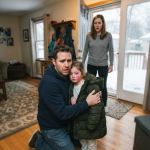
    Tears came instantly.

    “It hurts,” he whispered.

    That was the moment everything sharpened.

    UNDER THE BATHROOM LIGHT

    Michael carried him upstairs carefully, avoiding his lower back.

    Under the bright bathroom lights, there were no shadows left to hide in.

    “You’re safe here,” Michael said quietly. “You’re not in trouble. I just need to know what happened.”

    Leo’s shoulders shook.

    “She told me not to say anything,” he whispered. “She said it would be worse if I did.”

    Michael’s voice stayed calm.

    “Who?”

    “Mom. And her boyfriend.”

    The words landed like ice.

    “She said you couldn’t help me.”

    Michael closed his eyes for one steadying breath.

    When he opened them, he already knew what he would do.

    THE TRUTH WRITTEN IN BRUISES

    What he saw confirmed it.

    The injuries weren’t from roughhousing. They weren’t new. They told a pattern — repetition, fear, silence reinforced with pain.

    This wasn’t a single bad moment.

    It was a system.

    Michael didn’t shout. He didn’t call his attorney. He didn’t threaten.

    He stepped into the hallway and dialed 911.

    “My name is Michael Stone,” he said evenly. “My ten-year-old son has been injured. I need police and medical assistance immediately.”

    His voice never wavered.

    FLASHING LIGHTS

    Within minutes, the quiet house filled with controlled urgency.

    Paramedics examined Leo gently. Officers moved with precision. Statements were recorded. Photographs taken.

    Leo was transported to the hospital.

    Michael rode beside him.

    Doctors confirmed what Michael already understood. The injuries were significant. Some were older.

    The pattern was undeniable.

    Later that night, an officer entered the hospital room.

    “We brought them in,” she said. “Your ex-wife and her partner. There was enough evidence to hold them.”

    Michael exhaled for the first time since 6:55 p.m.

    COURTROOMS AND HEALING

    Emergency custody was granted quickly.

    Protective orders followed.

    The explanations Brenda and her boyfriend tried to offer unraveled under scrutiny.

    Michael attended every hearing.

    Leo sat beside him, small hand wrapped tightly around his father’s fingers.

    Healing wasn’t immediate.

    Leo slept in Michael’s room for weeks. Nightmares came in waves. Therapy became routine. Michael stepped back from work without hesitation.

    Business could wait.

    His son could not.

    ONE YEAR LATER

    Another Sunday evening.

    The sky dipped toward the Pacific, washing the deck in gold.

    Leo leaned back comfortably in his chair, legs stretched out, laughing as their dog nudged him for attention.

    He shifted without flinching.

    Without hesitation.

    “Dad?”

    “Yeah?”

    “Thanks for believing me.”

    Michael wrapped his arm around him.

    “Always,” he said. “That’s my job.”

    The city lights flickered on below the hills.

    And for the first time in a long time, Sunday didn’t feel like an inspection.

    It felt ordinary.

    Peaceful.

    Safe.